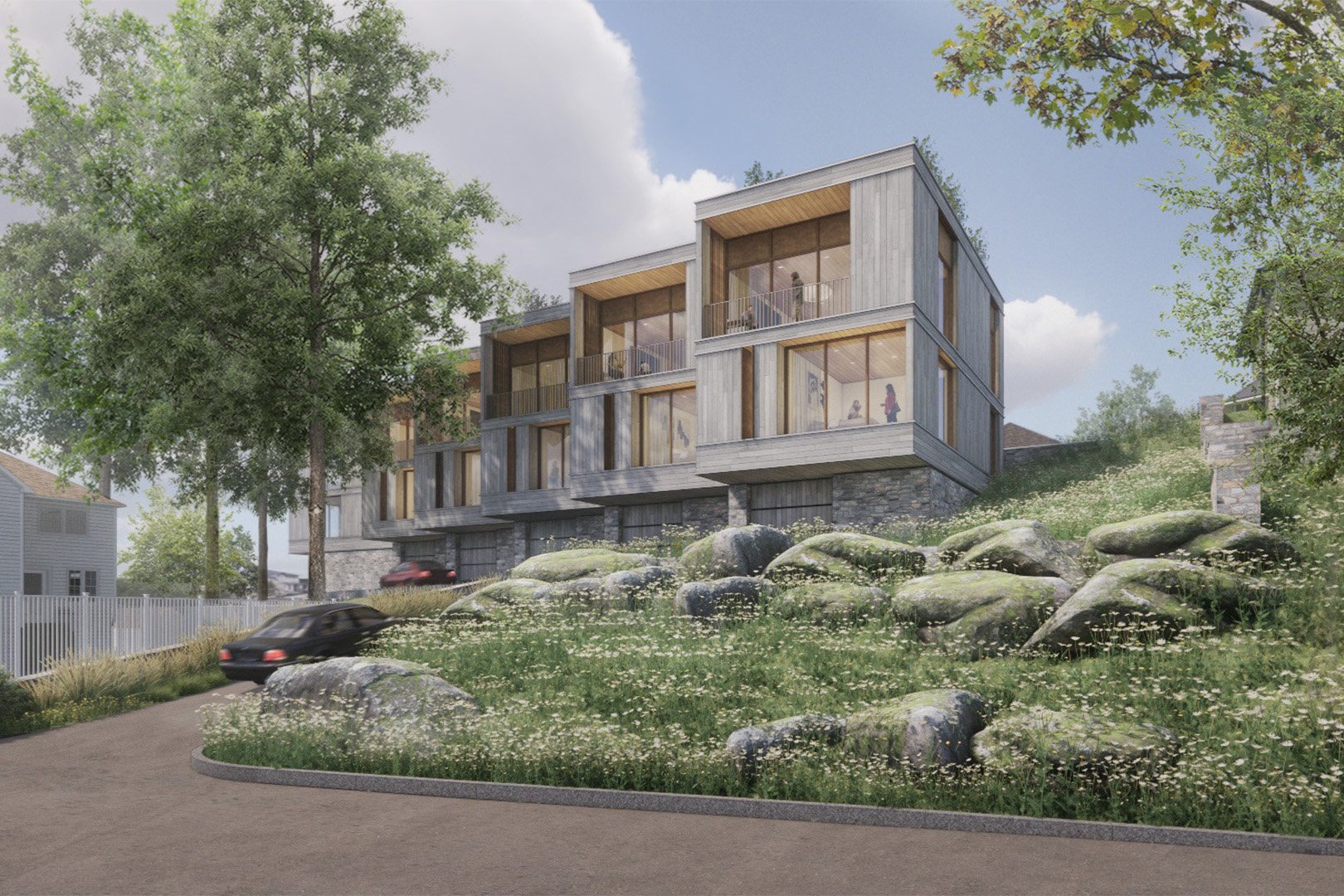
Boston, Massachusetts | 49,000 sf | 49 units over parking | Mass Timber
Orient Heights Multifamily
How can a new building mediate between an existing smaller scale neighborhood and future development of a larger scale?
Orient Heights Multifamily
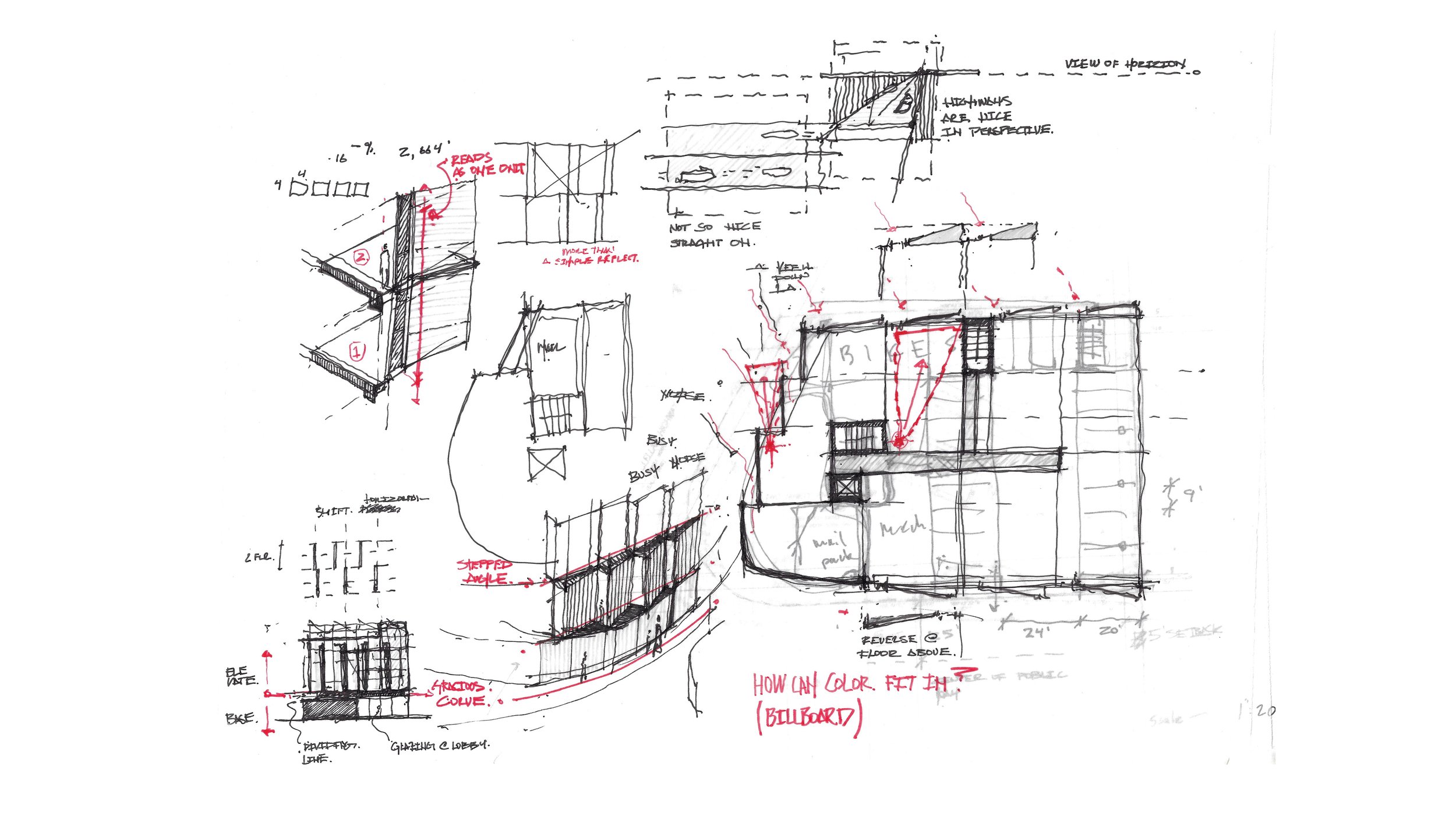
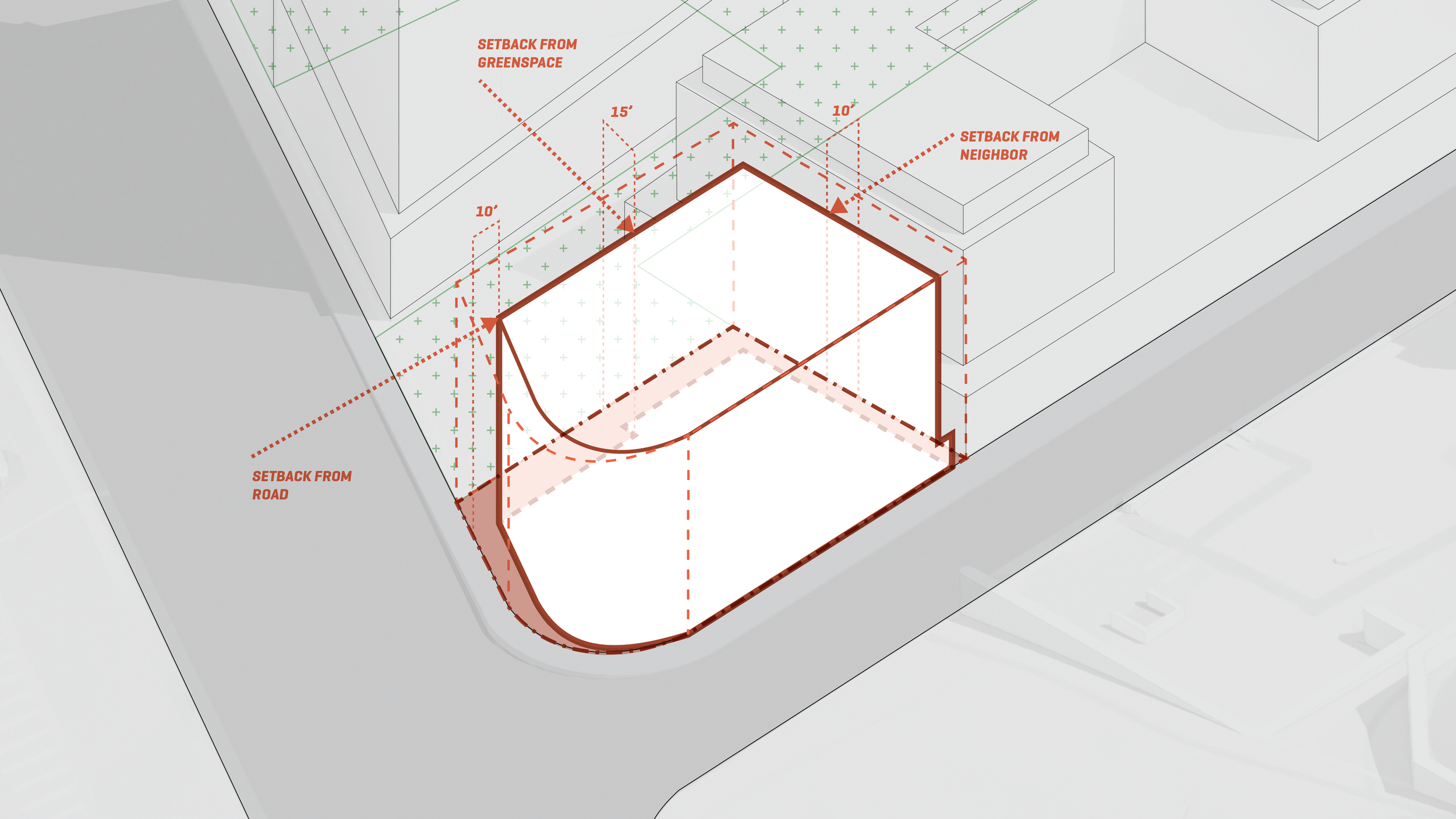
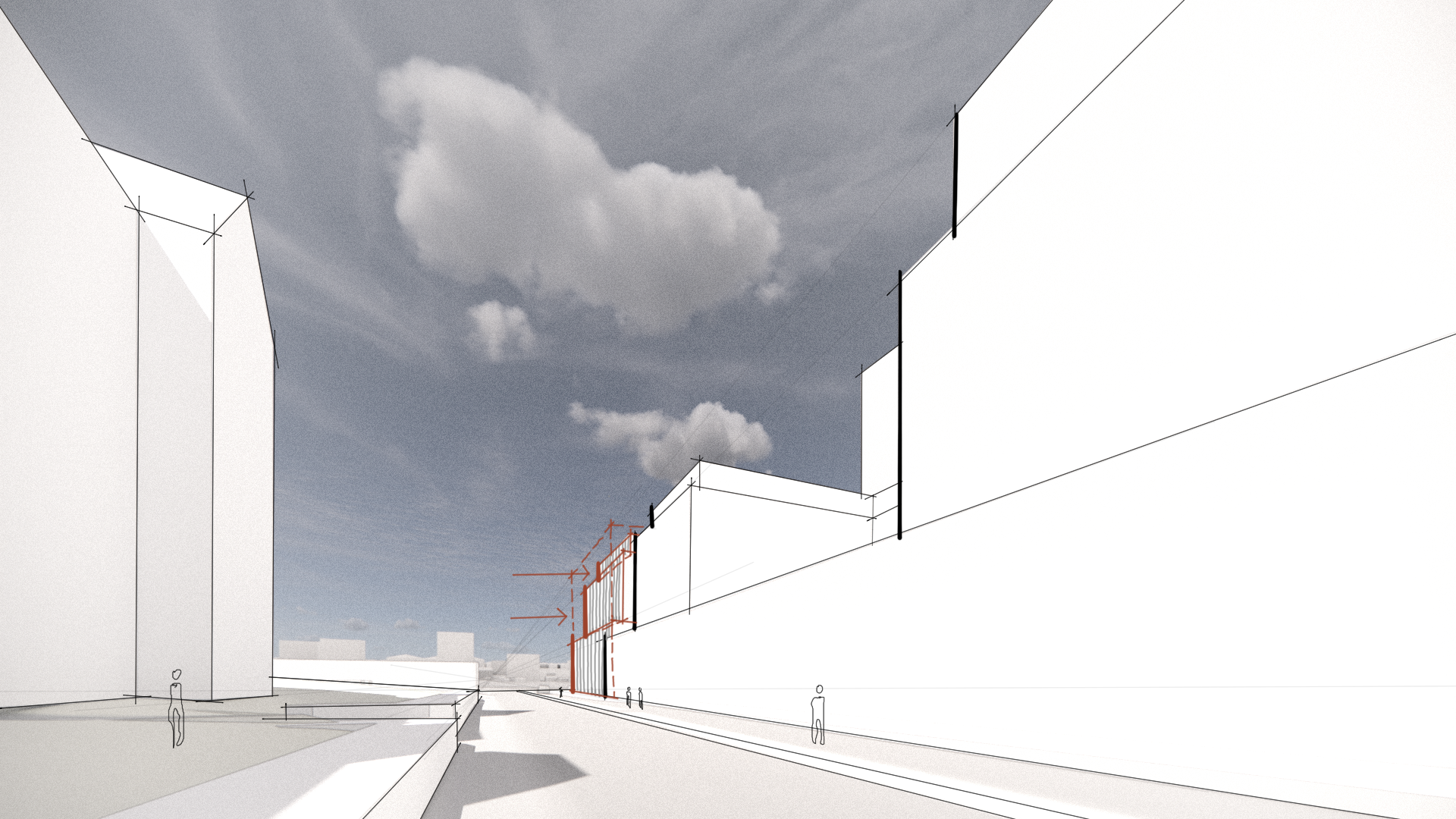
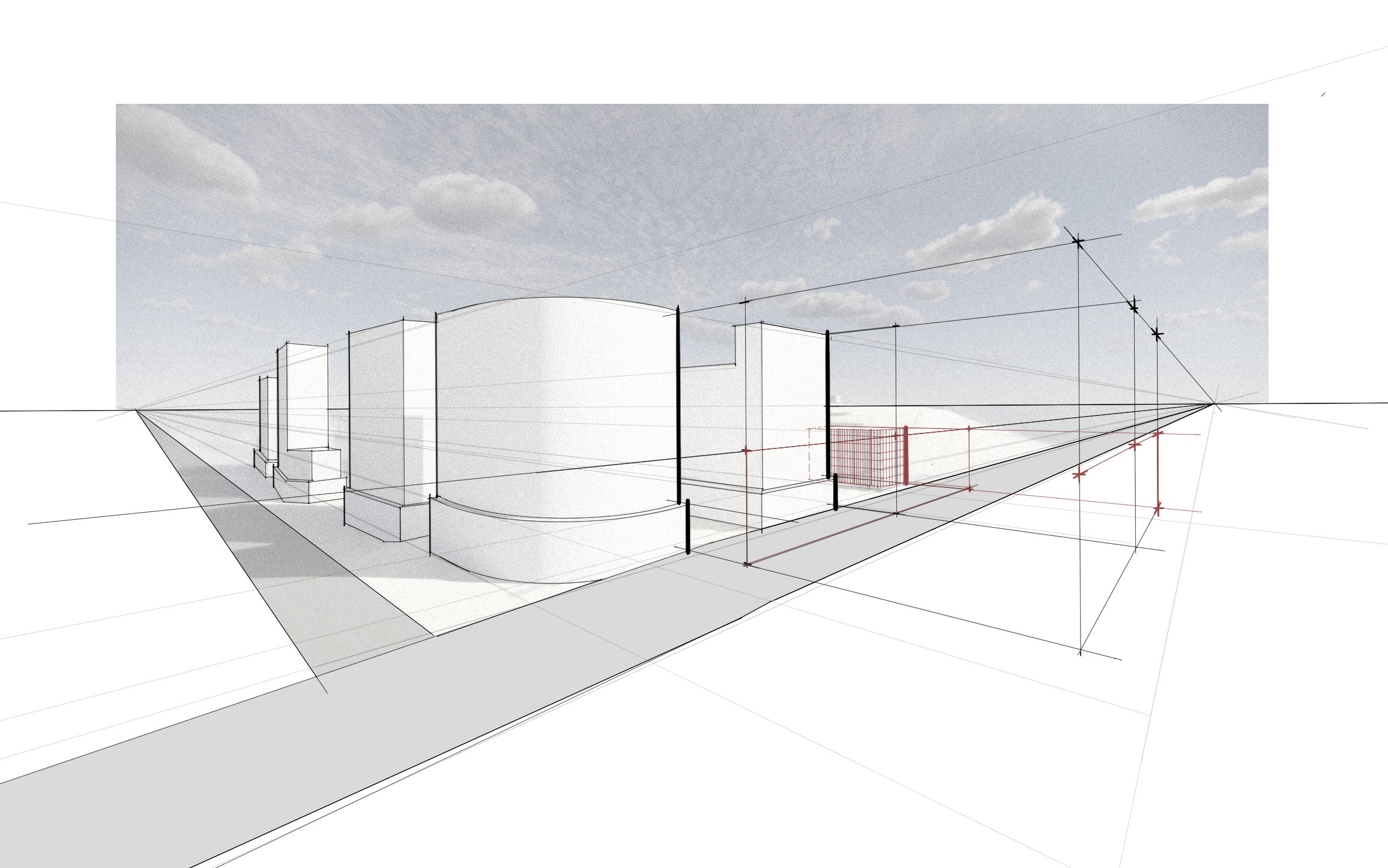
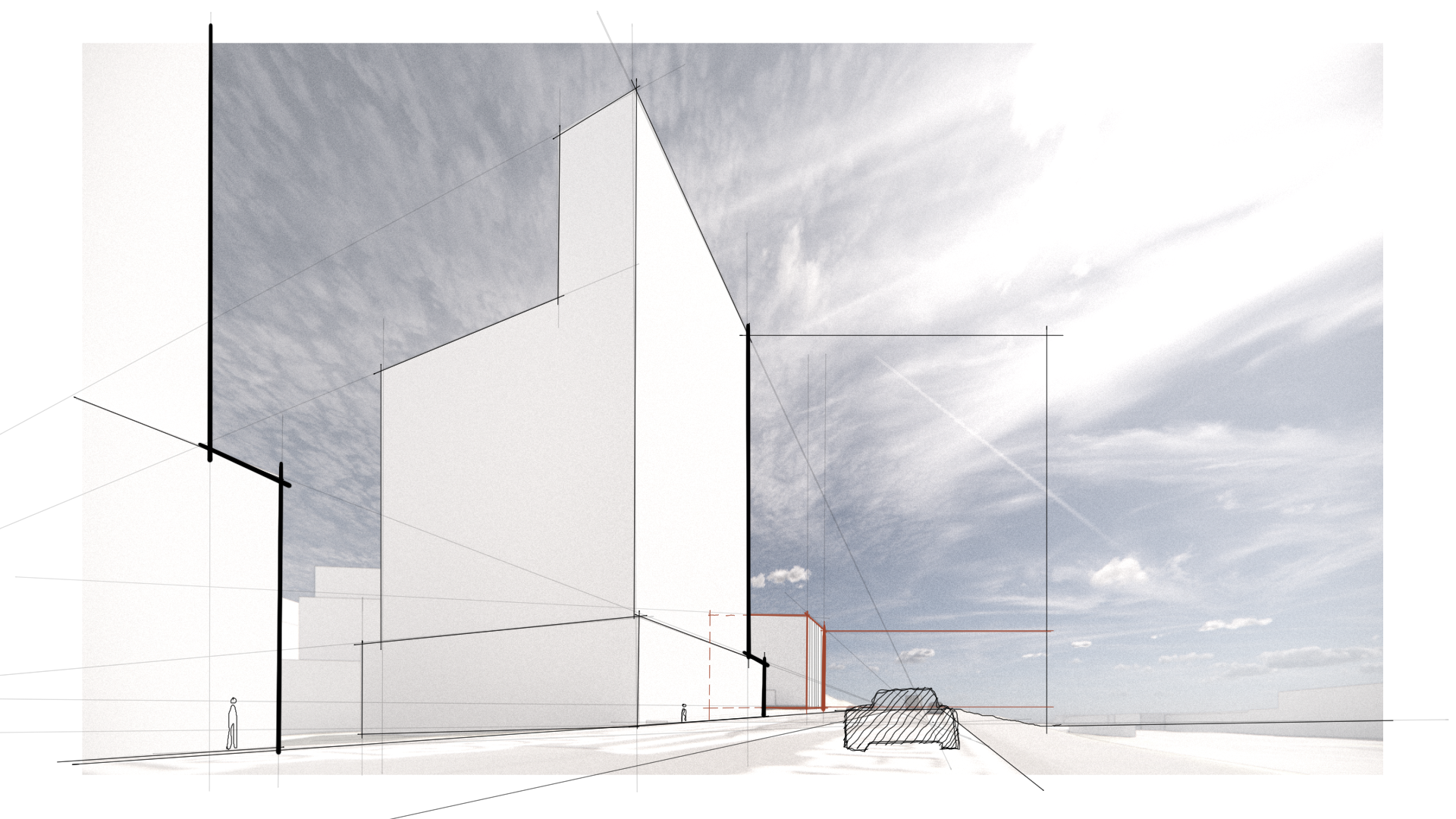
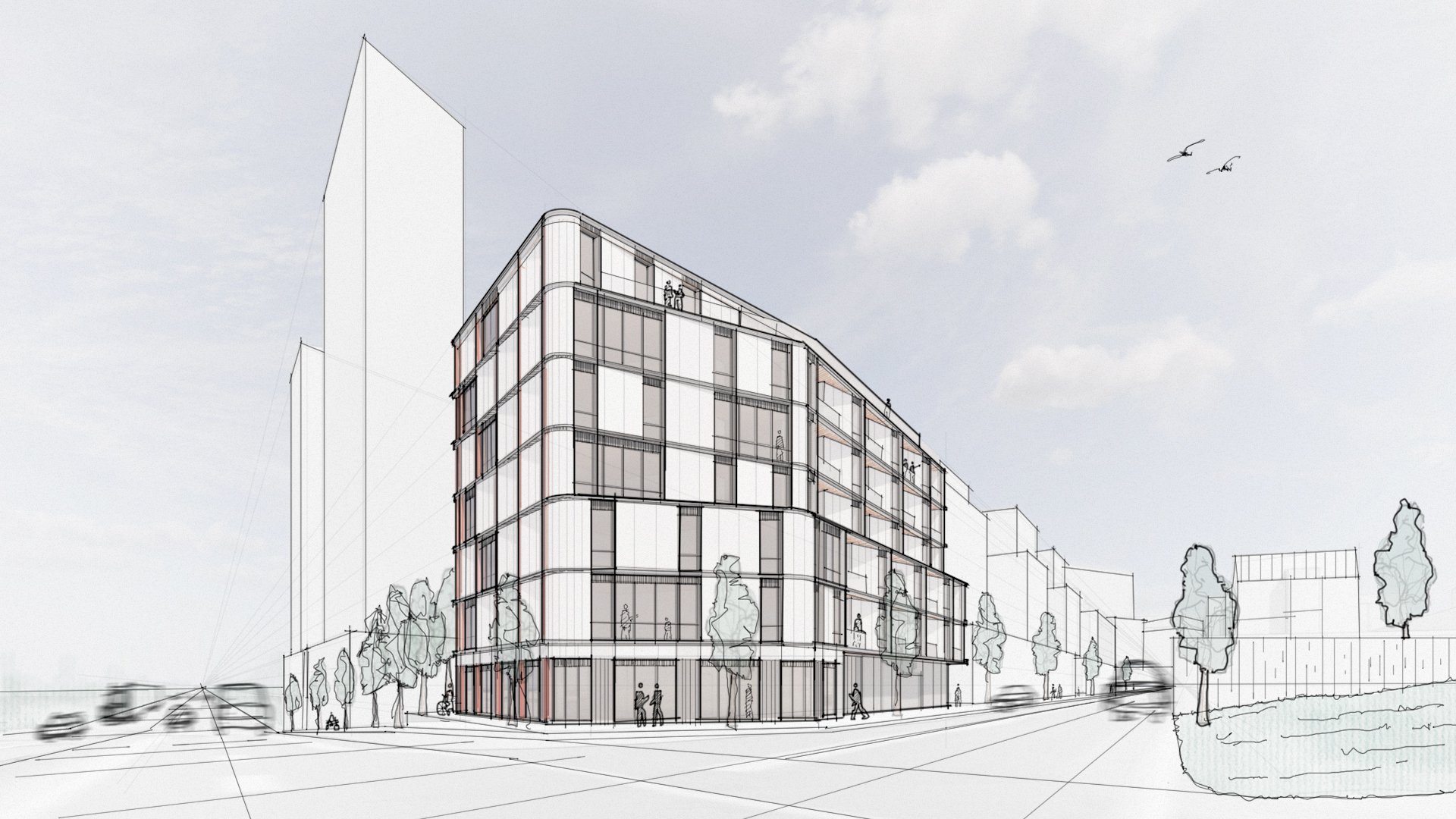
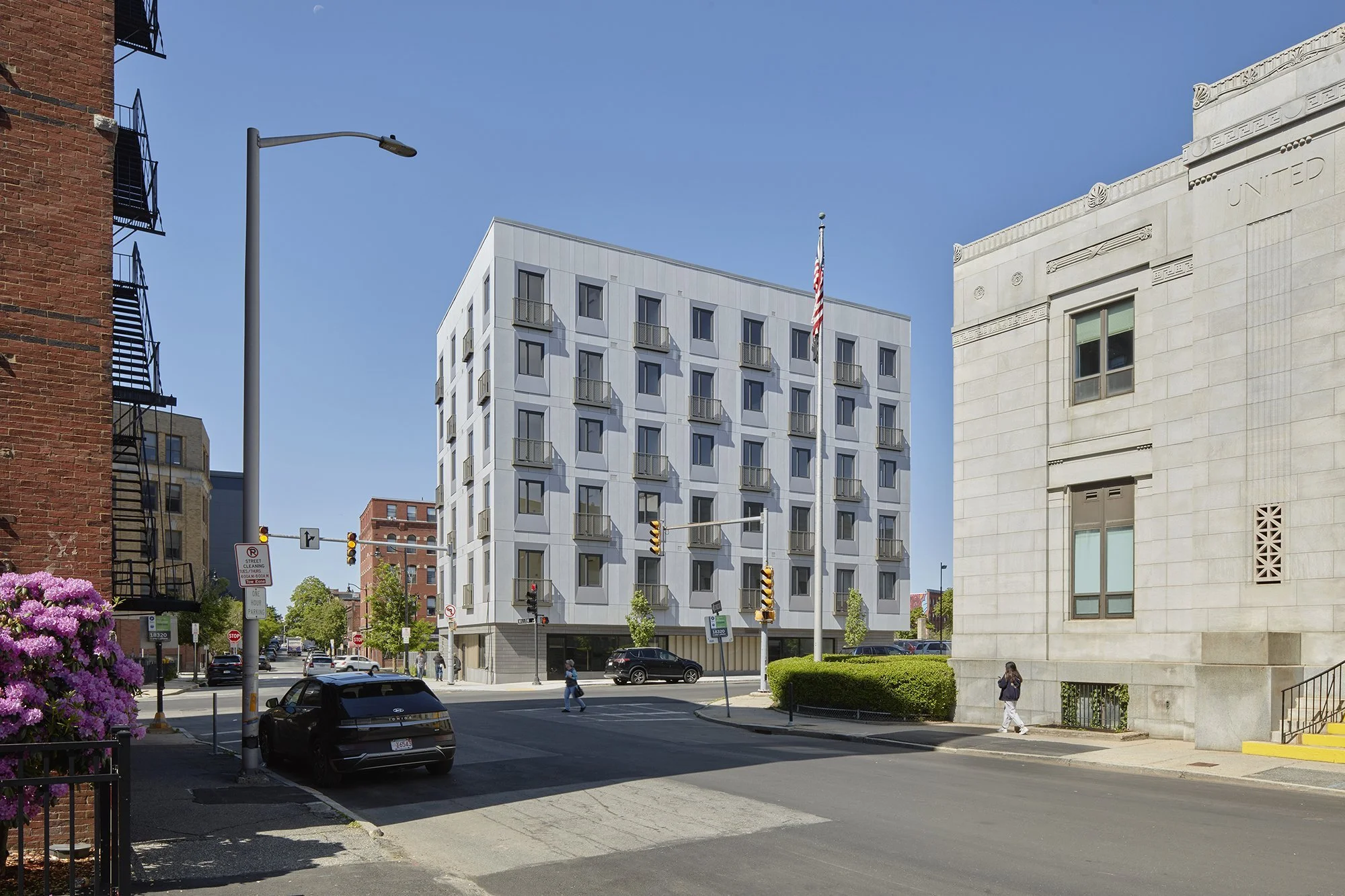
This project finds the middle ground between the past, present, and future of the neighborhood. Anchoring a corner site, the building massing responds to distinctly different edges by mediating scales, views, and levels of traffic and noise to create a distinctive landmark.
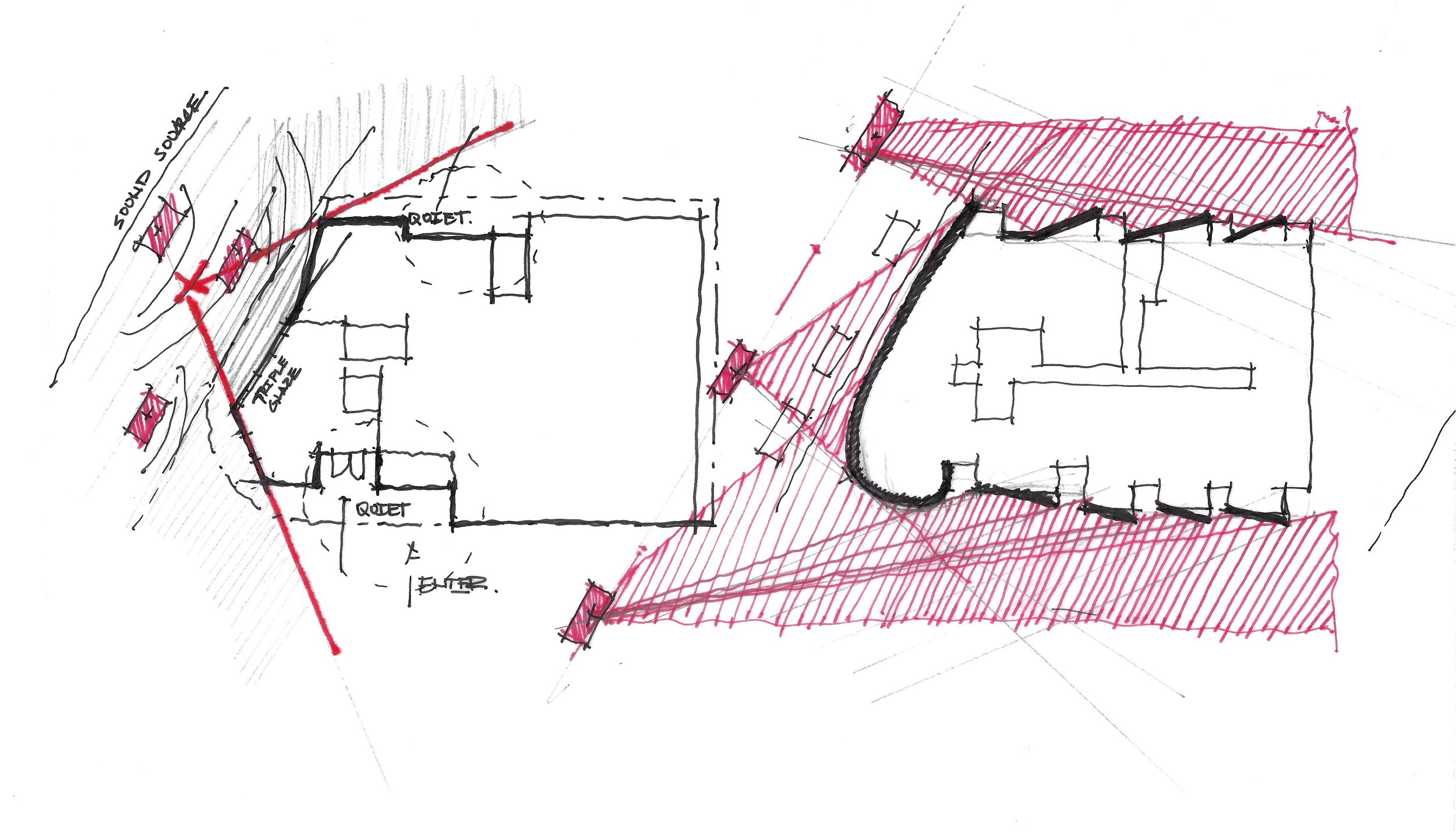
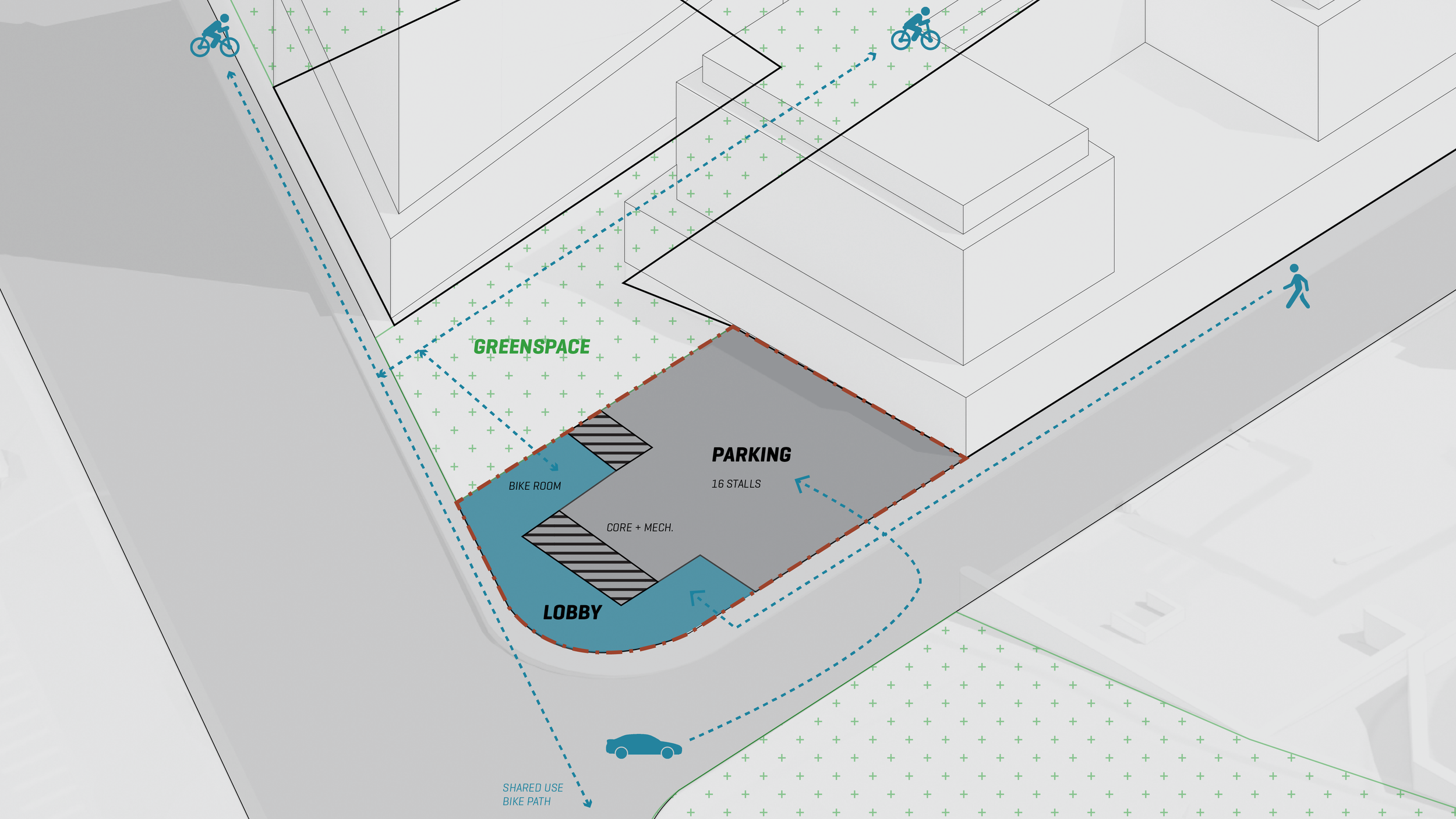
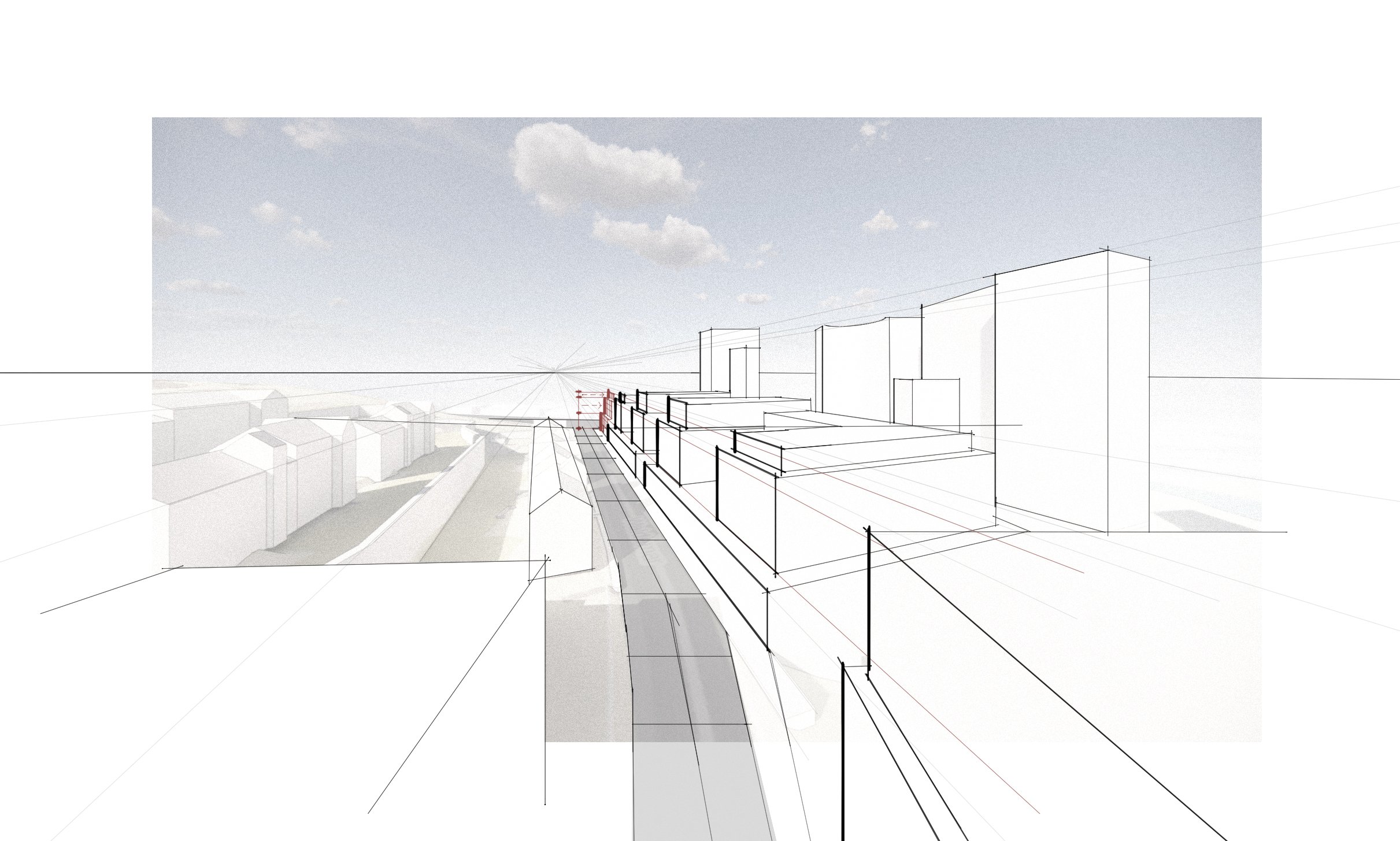
The site is located at the corner of a heavily trafficked thoroughfare and a neighborhood street where low-rise townhouses and apartment buildings have recently been developed. Soon, larger scaled mid- and high-rise residential, hotel, and commercial buildings will be constructed with our site at the tip of the future development iceberg.
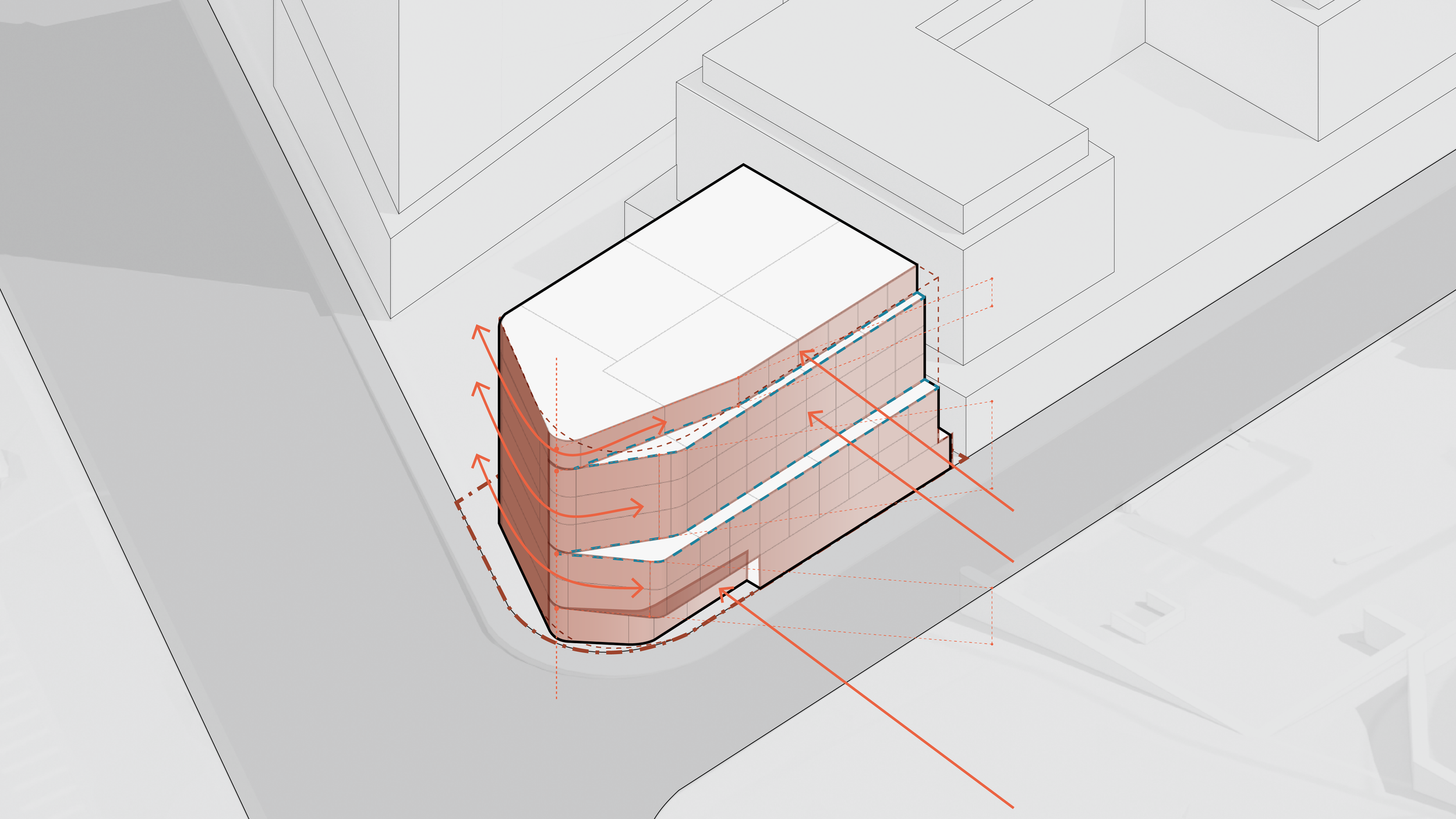
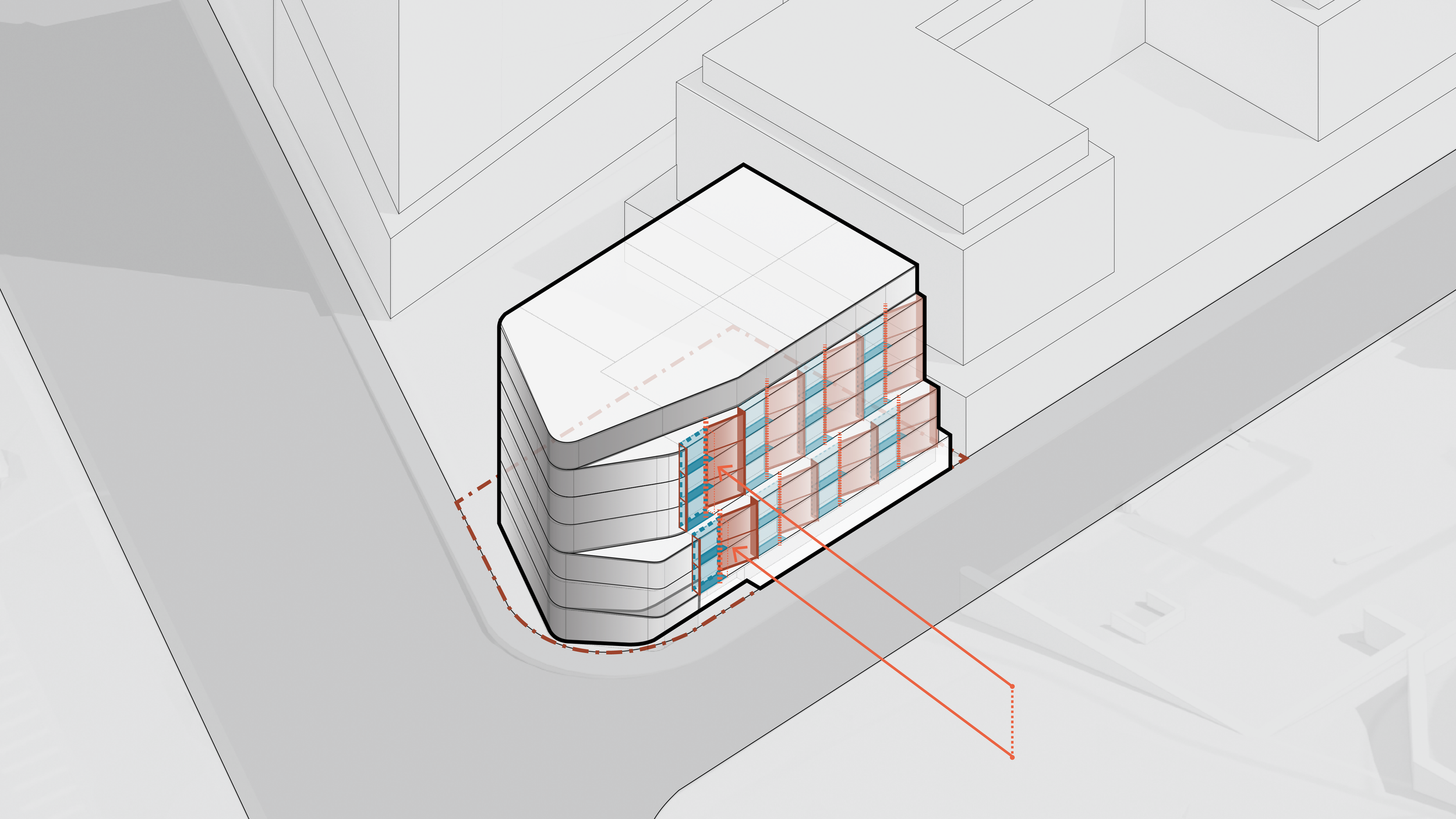
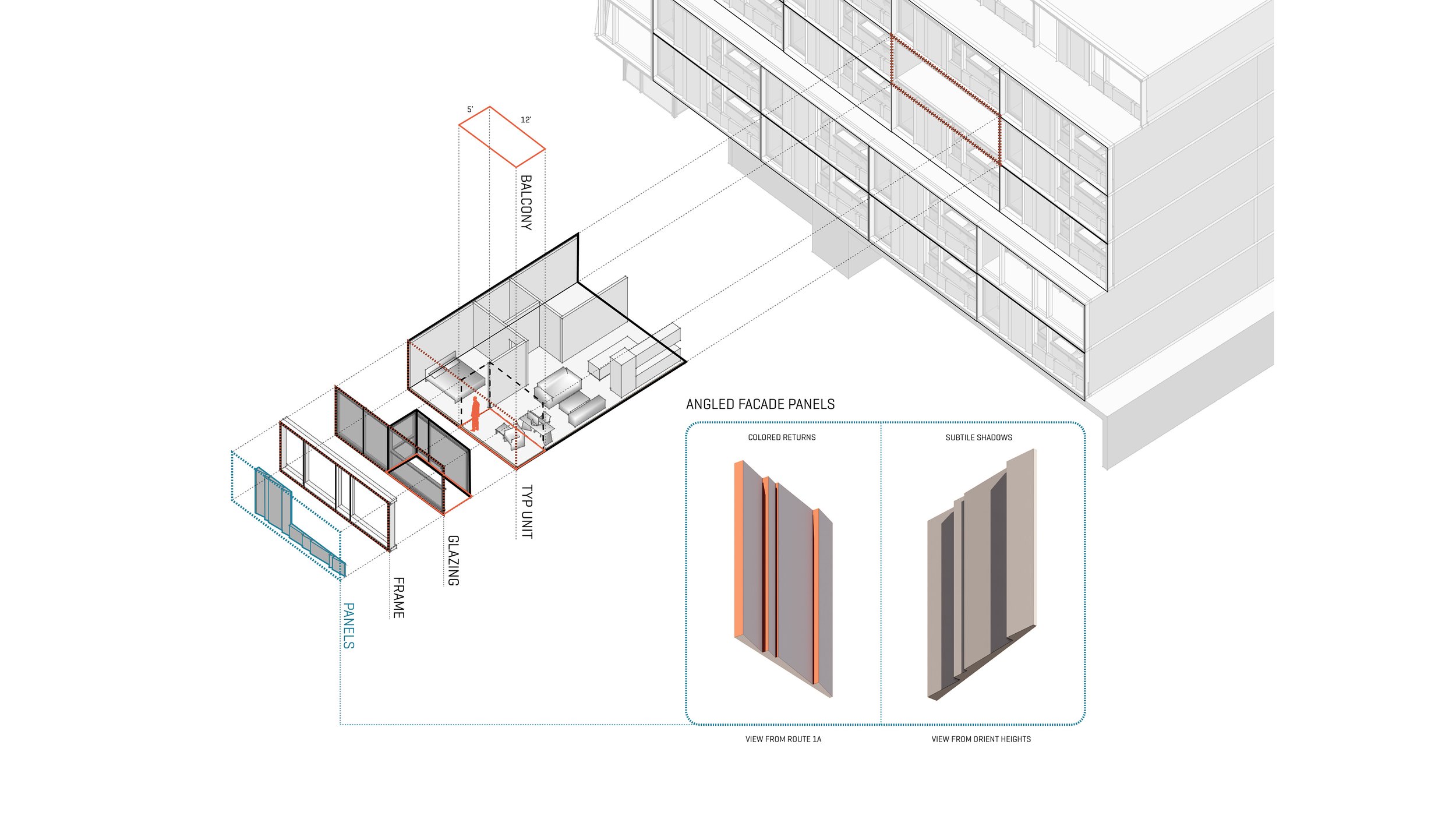
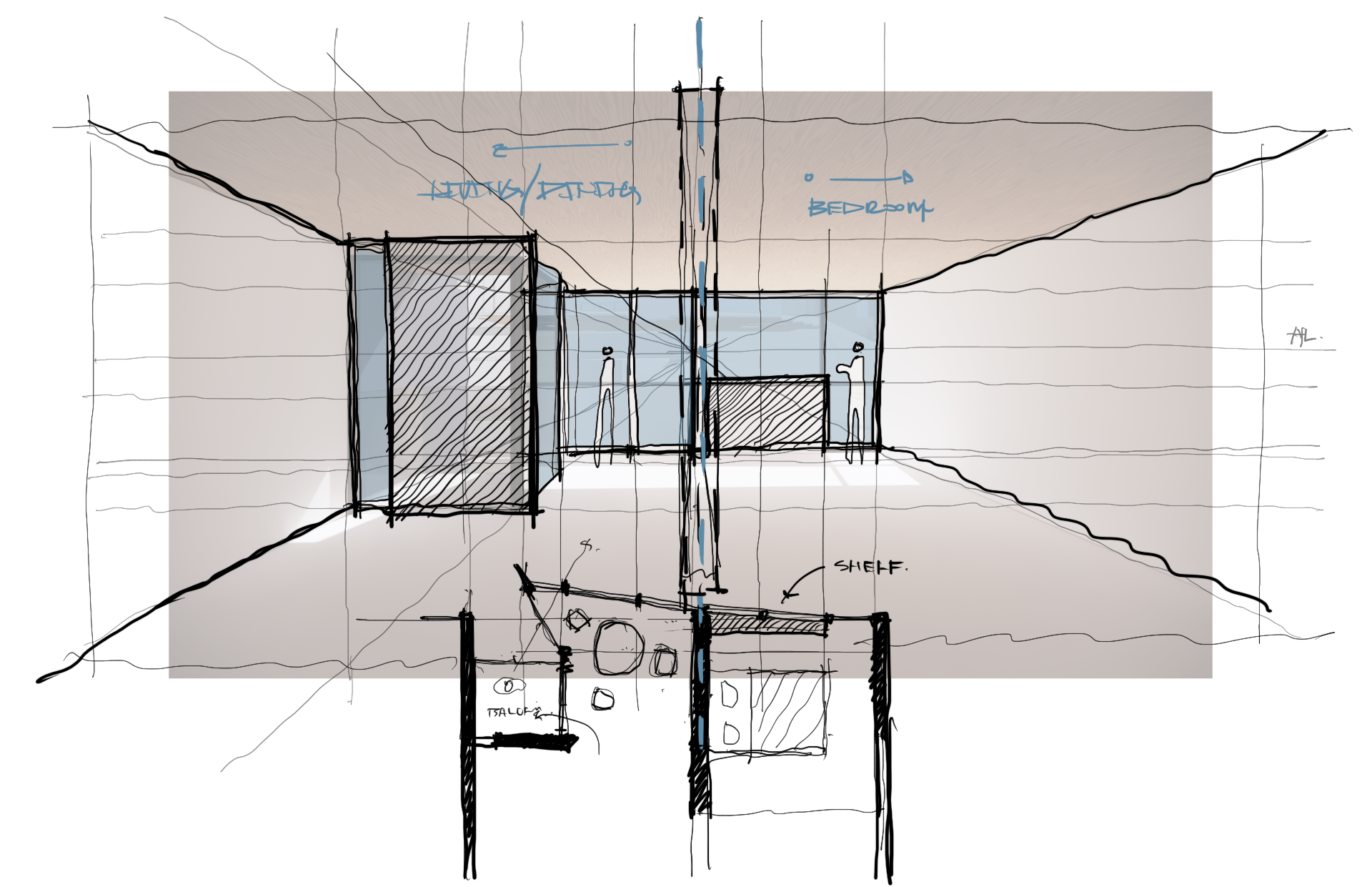
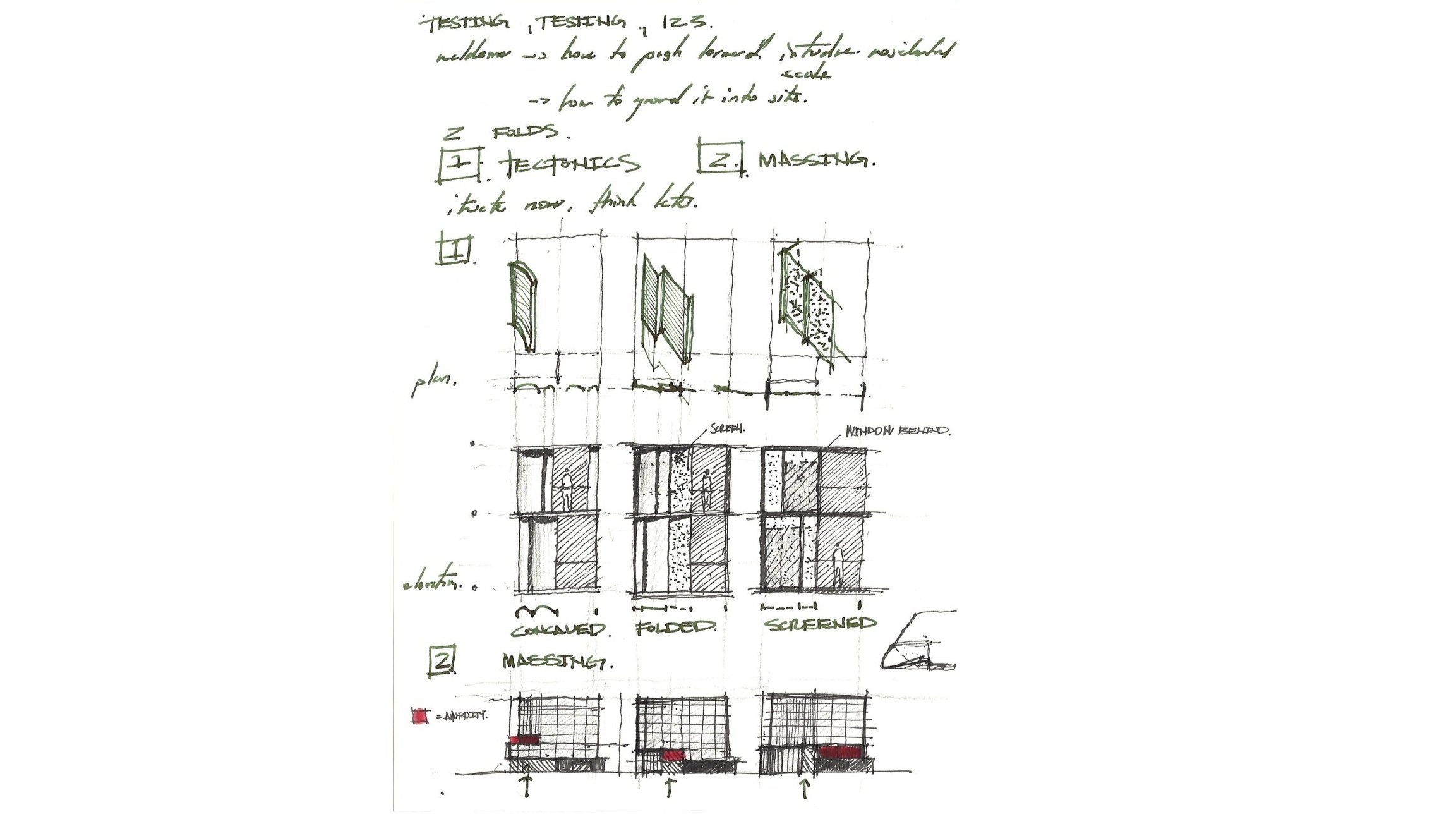
Our design responds by presenting itself as a large continuous façade to the thoroughfare while smoothly rounding the corner to the neighborhood street with a stepped façade composed of serrated panels to reflect and dissipate sound. With residentially scaled windows and balconies The balconies are pulled inboard and flanked by the stepped façade to increase privacy and reduce the impact of traffic noise.
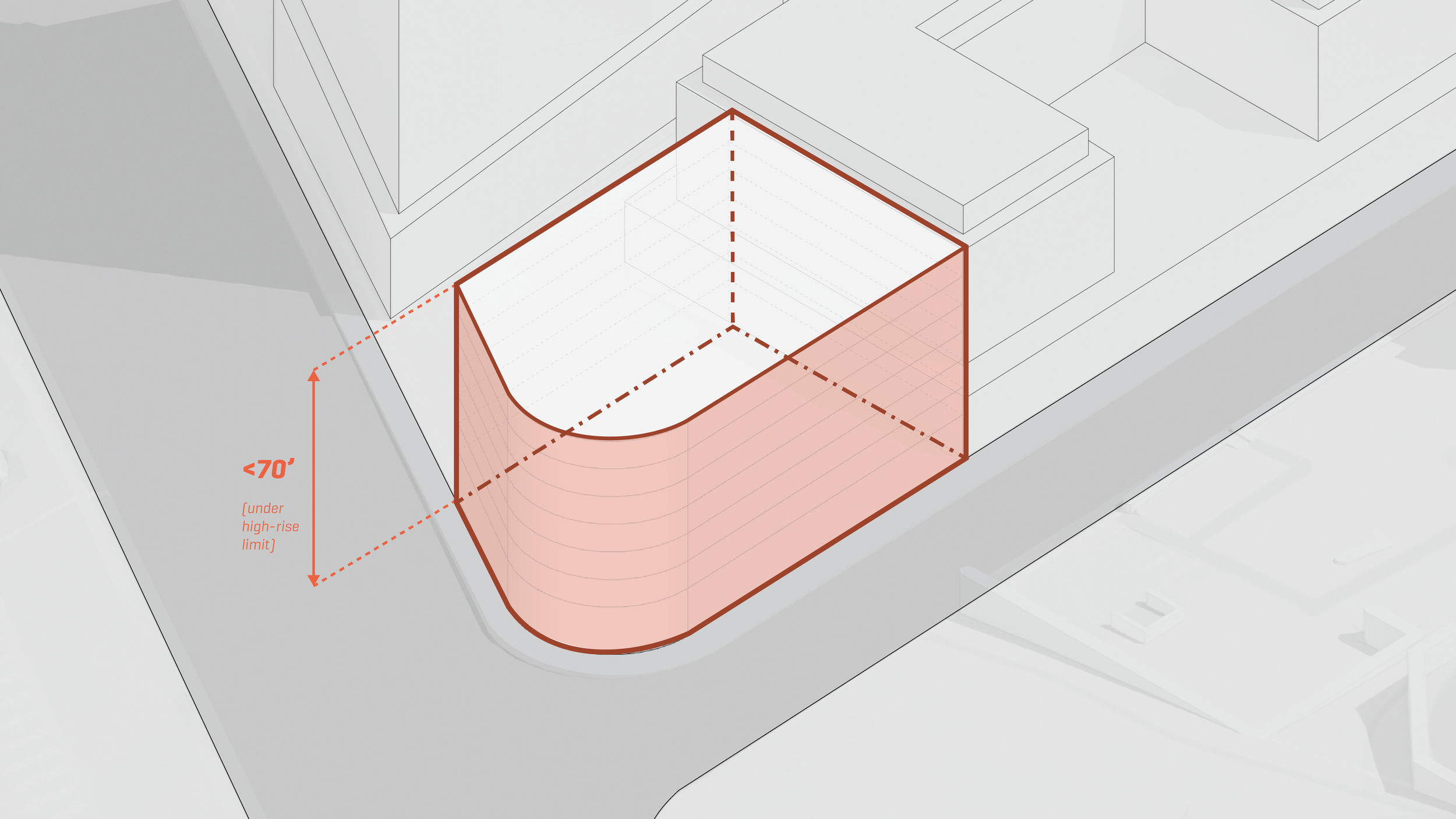
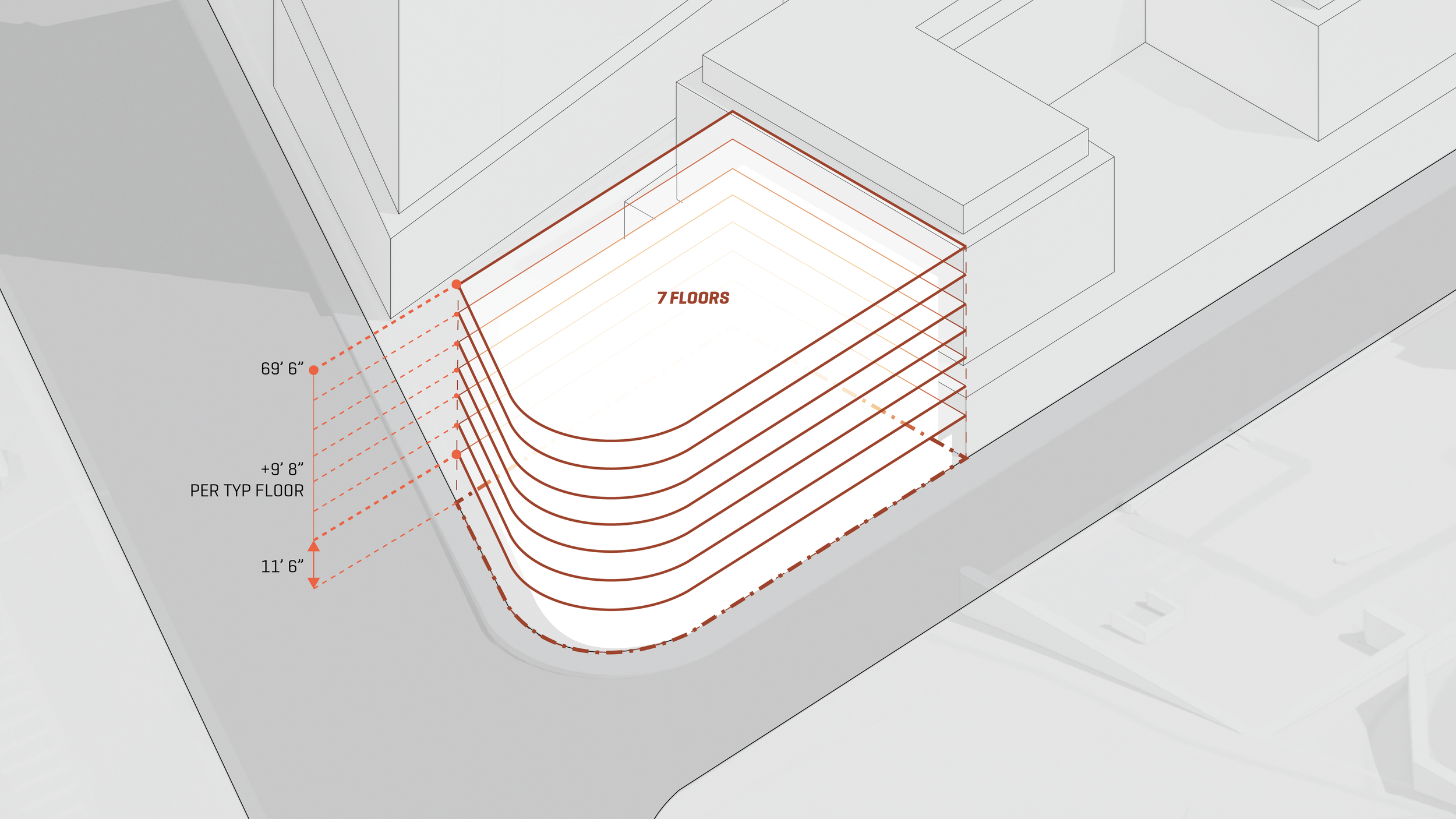
We are leveraging a mass timber structural frame for its construction speed, aesthetics, and carbon benefits. It also allows for a lower floor to floor height where we can achieve 7 floors under the high-rise height threshold.
More Projects
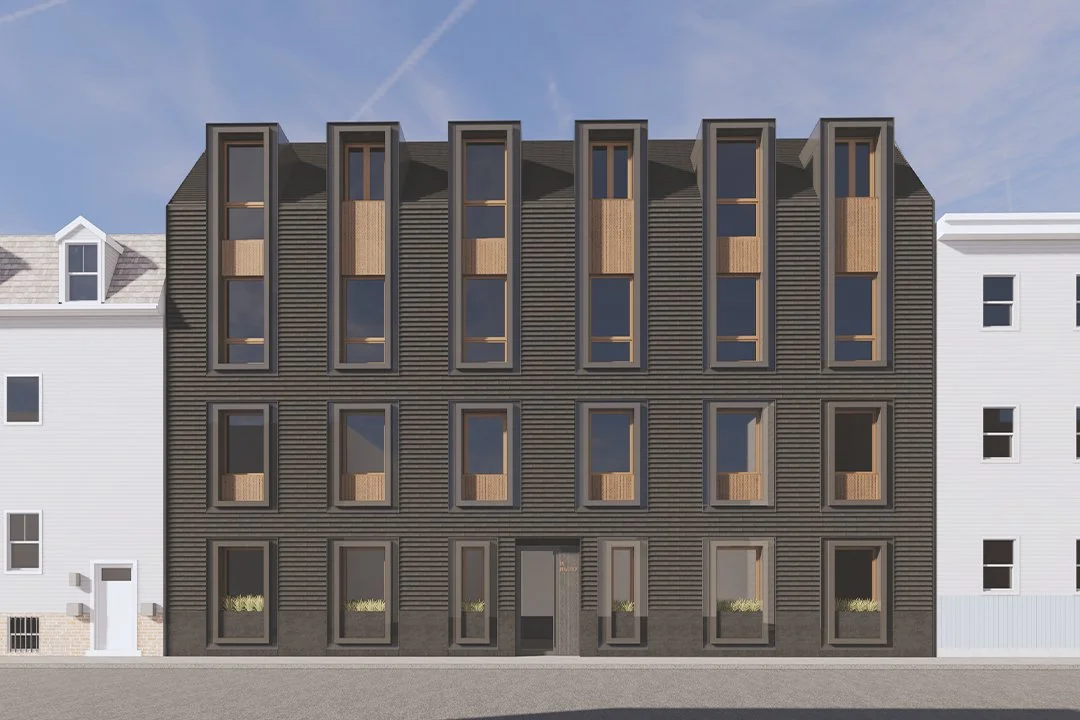
The Oxford offers a new reflection of place by assimilating into the vibrant downtown Lynn context. Its design, reminiscent of early 20th-century masonry buildings with stacked windows and inspired by the city’s renowned graffiti murals, creates a bridge between the past, present, and future of urban living. This mixed-use project brings life and vibrancy to the neighborhood with its artfully layered facades that shift in color, tone and reflectivity as the daylight changes. Supporting the apartments above, the ground floor facades pinch inward to accentuate the building entrances and expand the public realm for the retail uses.
The building features a striking 7-story mural on its party wall, while the other three façades have been thoughtfully designed with fenestration, beveled accent panels, and wall cladding that echo the texture, pattern, and color of the surrounding context. This approach not only pays homage to the area’s character but also sets a new standard for modern housing.
In response to the increased appreciation for private outdoor spaces during the pandemic, each of the thirty dwelling units is equipped with oversized windows and at least one full-height door with a sidelight, leading to a private balcony. This design maximizes daylight and ventilation, making the units feel warm, spacious, and connected to the outdoors. Additionally, this feature enhances the living experience, making the interior life more visible and animating the exterior with interactions among neighbors enjoying the urban views.
H I G H L I G H T S
Floor Area Ratio of 5.5
Residential floor plate efficiency is 92%
Balconies with full height glass door and sidelight for each unit
Thoughtfully designed and documented, repeatable facade design elements minimized change orders
Highly efficient building envelope using European style, tilt-turn windows to maximize daylight and ventilation
Boasts world-class graffiti art with a 7-story mural and smaller murals throughout
5-over-1 podium construction with Roof Deck and Penthouse with work bar
Pet washing station and refrigerated food delivery storage
Pinched in ground floor retail to accentuate entrances and give more sidewalk space to the public
How can a new building reinforce positive growth and planning strategies while setting a higher standard for environmental stewardship not typically in this neighborhood?
This project serves as a catalyst for the future of a prominent cornerstone site in East Boston by introducing accessible and vibrant uses to reengage the pedestrian realm. The use mass timber is being leveraged for its construction speed, aesthetics, and carbon benefits to further establish the building as a model of urban environmental stewardship.
The wedge-shaped site is located adjacent to Day Square and Chelsea Street in East Boston, with the narrower end offering a cityscape view of the Boston skyline. With a future multi-family development planned across the square as well as the addition of a MBTA bus stop, we considered place-making opportunities on the ground level. A stepped roof and south-facing façade design maximizes access to exterior spaces, and also opens up more daylighting and desirable views.
Inspired by the rich history, scale, texture, and sense of permanence evident in the many the turn-of-the-century post and beam mill buildings throughout Boston, we proposed a brick clad building that encases contemporary mass timber framed spaces within metal and glass volumes emerging at the stepped rooftops. The stepped façade allows the massing of the project to conform to the wedge-shaped site and provide articulation assimilating to the context of bay- or bow-fronted buildings. These steps also opportunistically create alternating balconies and views of the Boston skyline from each unit.
H I G H L I G H T S
Mass Timber structural frame
Passive House
Transit-Oriented Development
Boston Mass Timber Accelerator Recipient
Can we reinvent the typical multifamily style building - wood construction over a podium - on a tight budget, all while paying homage to the neighborhood’s history?
Boston, Massachusetts | Peregrine Group, LLC | 64 rental units | 1,500 s.f. commercial space
Located along a major historic artery into Boston, this infill, transit-oriented development includes a five-story, 64-unit wood-framed apartment community over a concrete podium and a ground-floor commercial space. The tight sloping site required clever approaches to squeezing a slight subgrade parking garage under the post-tensioned concrete podium and accomplishing the developer’s density and budget goals.
The mid-sized building is designed to bridge between the scale and proportion of the existing neighborhood three-story apartment building’s (known as triple-deckers) and the newly built larger scale multifamily developments. Determined to relate the building back to the neighborhood, our design unifies a collection of apartments, where, similarly to the neighborhood’s triple-deckers, each unit is visually expressed on the outside and within along the corridors. This results in a unique horizontal, cantilevered aesthetic, which is unexpected in wood-framed multifamily buildings. The staggering of the facade - analogous to the triple-decker - modulates the scale of the building by creating a sense of individuality and ownership within a dense context unlike most newly constructed multifamily buildings.
H I G H L I G H T S
• Innovative facade articulation and assembly methods for exterior materials
• Minimal Exterior Load-Bearing Walls
• Structural Insulated Panels (SIPs)
• Post-tensioned Concrete Podium
C O L L A B O R A T O R S
Peregrine Group | L.A. Fuess Structural Engineers | Consulting Engineering Services | Lewis Lighting Design | Pare Corporation | Birchwood Design Group | Kalin Associates | Hawk Visuals | Bald Hill Builders | Foard Panel | John Horner Photography | Robert Umenhofer Photography - unit interior only
How can a new building mediate between an existing smaller scale neighborhood and future development of a larger scale?
This project finds the middle ground between the past, present, and future of the neighborhood. Anchoring a corner site, the building massing responds to distinctly different edges by mediating scales, views, and levels of traffic and noise to create a distinctive landmark.
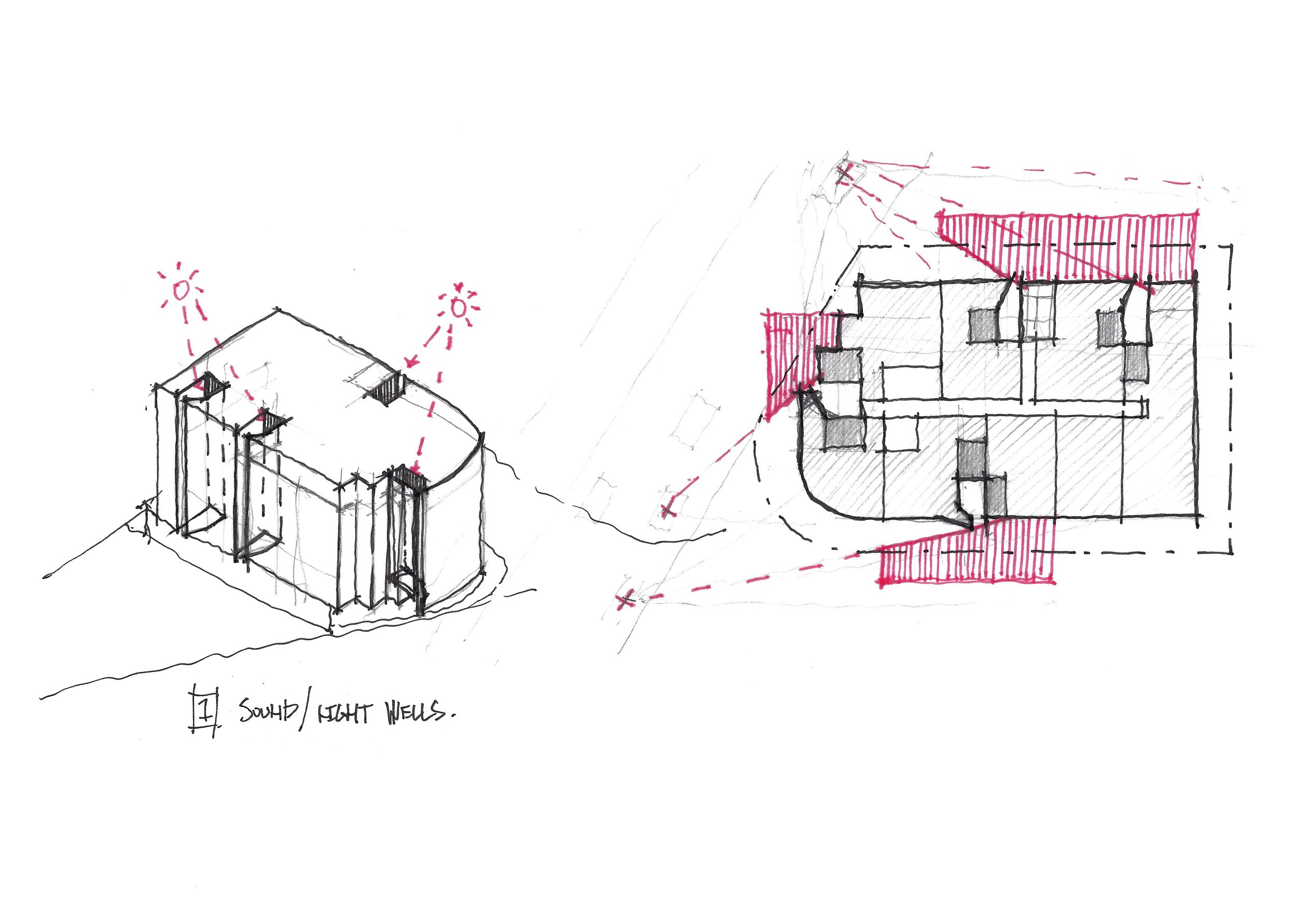
The site is located at the corner of a heavily trafficked thoroughfare and a neighborhood street where low-rise townhouses and apartment buildings have recently been developed. Soon, larger scaled mid- and high-rise residential, hotel, and commercial buildings will be constructed with our site at the tip of the future development iceberg.
Our design responds by presenting itself as a large continuous façade to the thoroughfare while smoothly rounding the corner to the neighborhood street with a stepped façade composed of serrated panels to reflect and dissipate sound. with residentially scaled windows and balconies The balconies are pulled inboard and flanked by the stepped façade to increase privacy and reduce the impact of traffic noise.
We are leveraging a mass timber structural frame for its construction speed, aesthetics, and carbon benefits. It also allows for a lower floor to floor height where we can achieve 7 floors under the high-rise height threshold.
Designed in 1875 by notable architect Henry Hobson Richardson, this national landmark sat vacant until 2012 since a fire gutted the building in 1985.
The narrow building floor plates present unique challenges to the housing program; yet, the massive masonry walls and multiplicity of windows provide ample natural light and distinctive design opportunities. Acknowledging the edges as the dominant feature of Richardson’s building, the exterior walls are accentuated and thickened with ancillary program features; thus, prompting the residents to engage with the rehabilitated brownstone facade. The entry stair is activated by juxtaposing historical elements against the masonry wall. Doubling as a historical ‘depository,’ the residents are welcomed with an educational and functional interior that reveals the physical history of the building and its eclectic past.
H I G H L I G H T S
• LEED Homes Multifamily PLATINUM Certified
• 2014 Massachusetts Historical Commission Preservation Award
• 2013 Boston Preservation Alliance Award
• Nationally Registered Historic Building
• State and Federal Tax Credit Project
• H.H. Richardson Analysis
• Boston Globe article
C O L L A B O R A T O R S
L.A. Fuess Partners | CSI Engineering | Building Envelope Technologies | Collective Wisdom Corporation | CSTI Acoustics | R.W. Sullivan Engineering | Available Light | Conservation Services Group | Marc Truant & Associates | John Horner Photography
Filling in the last empty lot on the street, the 9 unit multifamily project assimilates into the neighborhood by taking cues from the adjacent buildings.
The 3.5 story building slopes back to mimic a mansard roof which helps alleviate the height differential it has with the surrounding buildings. Large windows on the front façade imitate the density and rhythm of the streetscape while including Juliet balconies for residents to enjoy.
By taking cues from the surrounding context, the new build fits seamlessly into the neighborhood while enhancing the streetscape. The rear façade includes balconies wrapped by a privacy screen which mitigates the limited space that exists in the rear yard. Adjusting the frequency of the wooden slats prevents views where they would be most critical in front of neighbor’s windows and decks.
How can we increase access to private and communal outdoor space in a post-pandemic world?
This project redefines the ubiquitous bay and balcony pair found throughout this neighborhood’s triple-decker homes. We aim to create indoor living space and a private outdoor balcony for each unit that connects to nature.
The project site is embedded in the Codman Square neighborhood of Dorchester among a variety of apartment buildings and two- to three-family structures. Our design responds to the double wide lot by breaking down the massing into two sections and aligns the front façade to assimilate with surrounding building widths and setbacks. A transparent lobby and bicycle room mark entry at the ground floor while concealing the parking. Tenants will have access to a common rear yard on the southwest side of the building to host gatherings and interact with their neighbors.
Unlike the typical configuration, we have geometrically linked the bay and balcony in each unit as a solid and void pair. This articulation of the façade allows each unit to be legible on the exterior while controlling the scale and proportion of the building. The units will be spacious with significant daylighting and will include one-bed, two-bed, and three-bed units each with a private balcony.
Inspired by the industrial history of the area, the project utilizes familiar masonry materials presented in new ways.
The buildings are organized to form two community plazas that become the crossroads for resident activities, entry, and social gathering. Each building has a number of distinct live/work units allowing home occupations that reflect today's varied working lifestyle. The sawtooth roofs collect the suns energy to offset power usage while giving the building a unique identity. A Cross Laminated Timber structure (CLT) was explored for its sustainability aspects, exposed wood aesthetic, and speed of construction.
We collaborate with our clients in the pre-design phases of a project to help them evaluate the opportunity of a given site. We often do this before land acquisition. Our expedient, thorough, and collaborative process allows our clients to be better informed of their investments.
Pre-design service, often prior to land acquisition
• Quick evaluation of massing strategies on a given site
• Accurate data analysis of square footage and building efficiencies
• Analysis of the urban context to identify mixed use opportunities
• Sustainable site strategies
How can an urban infill project assimilate into the historic Boston context while simultaneously differentiating itself as a unique living experience?
Located in the historic Downtown of Boston, this 4 unit multifamily infill building establishes itself as the missing link in the surrounding urban fabric. The contemporary insertion mimics it’s neighbors in height, window alignments, and color tone. A weathering steel skin differentiates the building and imbues it with a contemporary flare all the while maintaining the rich warm red coloring of its surroundings. The thickened façade responds to the program behind it: the retail ground floor offers ample glazing, while the next floor above offers privacy for residents with tall and narrow windows. With each successive level from the street, wider windows are provided. A mechanical parking system, accessed from the rear alley, provides each unit with one parking space, a highly sought-after commodity in the city.
H I G H L I G H T S
• Weathering Steel Facade
• Mechanical Parking System
• Ground Floor Retail
Once the site of World War II naval shipbuilding, the redevelopment of the Hingham Shipyard presented an opportunity to explore the intersection of past and present through three condominium buildings.
These buildings, located within a new mixed-use development of retail and parks, position themselves at the water’s edge, capturing views and creating a visual backdrop to the boat-filled marina they overlook. Material cues are taken from the metal-plated hulls of WWII naval ships, the clapboard hulls and mahogany trim of old sailboats, and the brickwork of former industrial buildings. This contextual palette creates a dialogue between building and boat; materials visually organize the building facades with rhythms following the marina docks and patterns reminiscent of ship hulls. Each of the 92 living units is individually connected to the landscape, water, boats, and sunsets of the shipyard.
Jason Hart served as the Project Architect and Manager while working for DiMella Shaffer.
C O L L A B O R A T O R S
L.A. Fuess Partners | RDK Engineers | Building Envelope Technologies | Collective Wisdom Corporation | Robert Benson Photography
The design of this speculative development responds to the context of a vibrant downtown neighborhood with a high-rise building that nestles into the large infill lot with a strong presence.
Our charge was to design a building that complied with allowable zoning regulations and maximized value for the site. We explored a mix of various uses that would combine to shape the building’s form, activate the street and result in a dynamic structure that would recall the past with a contemporary sense of permanence. The building design responds to the context with significant retail and commercial opportunities on the first two levels which are pulled in from the property line to create a double height arcade along the street. The remaining upper levels of the building provide a boutique hotel with a sky-lobby, indoor amenity spaces, and various outdoor terraces. The modularity of the façade expresses the cellular nature of the stacked hotel rooms and is carried out down to the articulation of bricks.
H I G H L I G H T S
• Thin composite steel-concrete floor system to achieve shallow floor-to-floor heights.
FREE RESOURCES
Whether you’re building a home, building a business, developing a community, or renovating a historic building, we have a variety of FREE guides tailored to your needs.